There are many ways to cook sinigang, a combination of different meats, vegetables and souring agent gives you a plethora of options but to simplify it here are the 39 ways to cook sinigang compiled for you
Sinigang is a sour soup dish from the Philippines usually prepared with meats like pork, beef, shrimps, fish and chicken served with vegetables like kangkong, okra, eggplant, tomato, onion and sting beans then is usually accompanied with either radish and/or taro. There are many ways to make it sour and the most common way is to use tamarind, the other souring agent that can be used are kamias, mango, santol, kalamansi, batawan and guava. Combining this in mind just imagine the many Ways to Cook Sinigang. While Philippines is a tropical country and we serve soups like this, you might be think we might be mad, why do we drink hot soups on a hot and humid country like ours? Well the sour taste makes it very refreshing.
Sinigang like adobo has been hanging around for quite some time, for how long no one specifically knows as the first written account for it was in the book written by our national hero, Dr. Jose Rizal, Noli Me Tangere, he finished the book in 1892. One of the main themes on some chapters of this book was about food and in the chapter titles “The Fishing Excursion”, Tía Isabel ordered the fisherman’s son to have the panalok (bamboo fishing net) ready “so the live fish can pass from the water to the sinigang broth”. There was also a section on the book where “Andeng, Maria Clara’s childhood friend, known to be an excellent cook, prepared the rice washing as a soup for the fish, adding some tomatoes and kamias.”
Apart from that there are no written accounts for it but many believed that it has indigenous origins others believe it might have originated from Malaysia since there is a similar tasting similar sounding name dish called ‘Singgang‘ where tamarind was also used to flavour the dish. I guess it’s hard to identify now but one thing for sure this dish had evolved and continue to do so specially in the last 30 years, I still vividly remember my grandmother preparing this with real tamarind nowadays you just need that magic tamarind packet and it removes all the hard work. While the taste will not be exactly the same, it is close and it still keeps the essence of what a sinigang is, it must be sour.
Now it’s not just the souring agent that evolved even the ingredients had, my best guess is that it all started with fish and tomatoes like what Dr. Jose Rizal written then the rest was history, the varieties started to become popular and even until now it still is continuing to evolve, so in line with that we are compiling a list of all the variants we know, some of which we already tried and cook and others just heard from friends and families, so without further ado here are the Many Ways to Cook Sinigang.
In this category you will see the usual sinigang dishes that are cooked in households on a regular basis.
Sinigang na Baboy – Traditional Sinigang that uses pork meat, popular cuts are belly, ribs, backbone (buto buto) and tail (buntot).
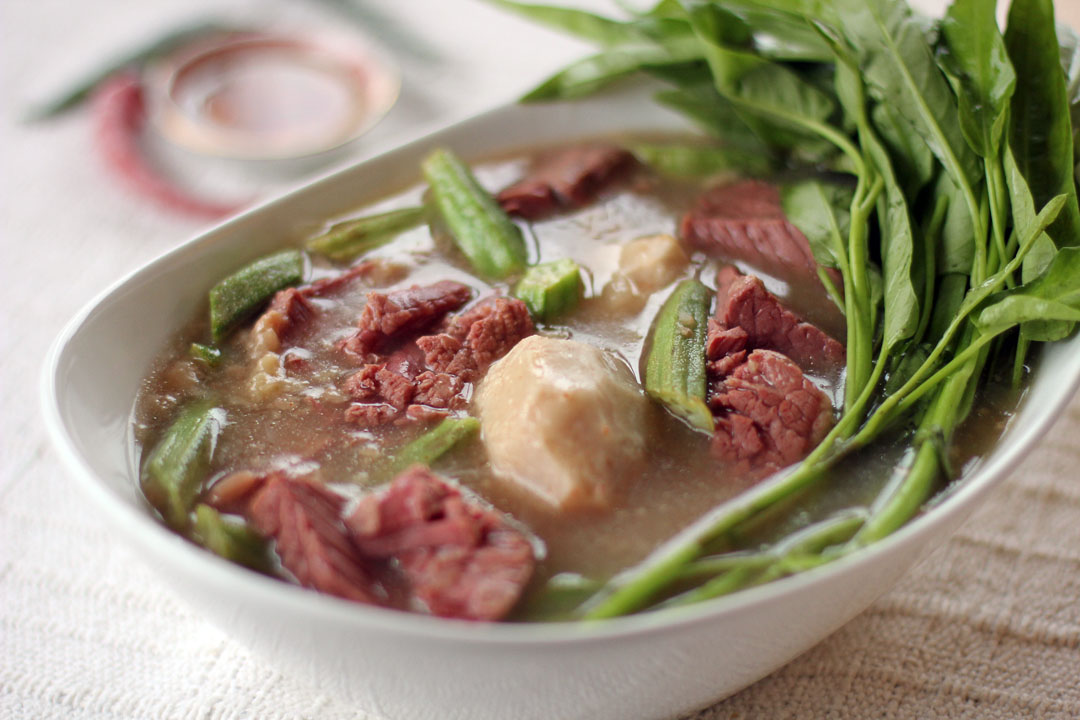
Sinigang na Baka – Traditional Sinigang that uses beef, popular cuts are brisket, ribs, neck bone and backbone (buto buto)
Sinigang na Isda – The fish version where mostly bangus (milkfish) or milkfish belly is used, large fish head as well is popular like tuna, snapper and grouper. For any seafood instead of the usual taro and kangkong, white radish and mustard leaves are used.
Sinigang sa Miso – Similar to the Isda but with an additional ingredient of miso
Sinigang na Hipon – Another seafood variety but this one uses prawns
Sinampalukang Manok – The chicken version of sinigang
Most of the ones on this category does not use tamarind, instead another sour fruit is used as an alternative. If the fruit used is not sour then a bit of tamarind is used to help with the taste, the fruit is just used to enhance the flavour.
Sinigang sa Mangga – Sinigang that uses unripe/green mango
Sinigang sa Kalamansi – Sinigang that uses calamansi, a small citrus fruit that is popular in the Philippines
Sinigang sa Lemon – Similar to kalamansi but mostly used by people overseas who does not have accessibility to kalamansi or tamarind mix
Sinigang sa Kamias – Sinigang that uses a highly acidic very sour and mild sweet tropical fruit called kamias or Averrhoa bilimbi in English
Sinigang sa Santol – Another alternative that uses unripe Santol or Cottonfruit, another sour and sweet tropical fruit.
Sinigang sa Balimbing – Similar to kamias but uses Balimbing or Carambola
Sinigang na Bayabas – Sinigang that uses guava, not the large one but the guava with soft pink insides. This one in particular is not as sour as the others but it gives a mild sweet flavour with a funny texture.
Sinigang na Baboy in Guava and Pineapple – Similar to above but with pineapples
Sinigang sa Pakwan – Another not so sour sinigang but uses tamarind to add a bit of sourness to it, made with watermelon, its main purpose is to replace the water with a sweet alternative
Strawberry Sinigang – Another fruity version that uses strawberries
Now in this category most of the dishes are fused with another Filipino or non-Filipino dish, the results are interesting but still keeps main flavour which is sour
Sinigang na Corned Beef – The simplest one in this category where instead of the usual meat cuts, corned beef is used giving it a nice salty flavour
Sinigang na Lechon / Sinigang ng Haciendero – Similar to above but uses lechon instead (roast pig), most probably created by people who get tired of using leftover lechon on paksiw
Sizzling Sinigang – Sinigang served on a sizzling plate in a thick tamarind gravy
Sinigang Beef Sukiyaki – Sukiyaki style sinigang
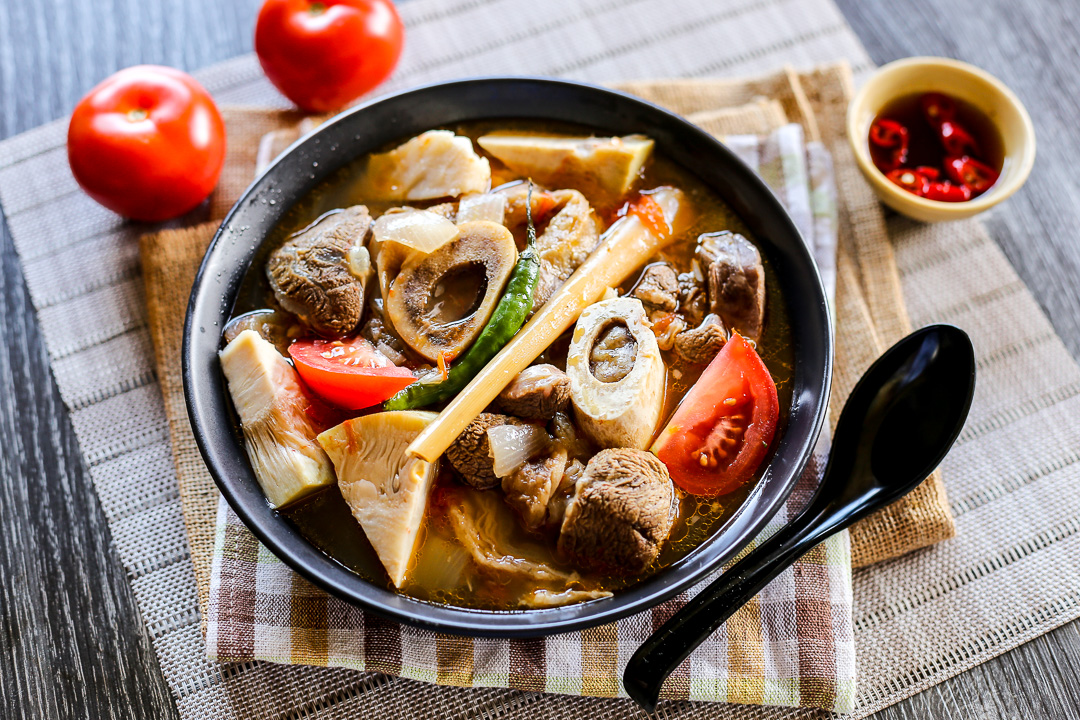
Asimbull (Bulalo Sinigang) – A cross between bulalo and sinigang
Kimchinigang – A spicy sinigang helped by a generous amount of kimchi added
Sinigang Na Munggo – Gisadong munggo that tastes like sinigang
Sinigang na Sinangag – A cross between sinigang, sinangag, lechon kawali, all cooked and infused with sinigang broth
Sinigang Paella with Grilled Pork Belly – The paella version of the above and served with grilled pork
Roast Chicken Sinigang – Lechon manok in a tamarind spice rub
Sinigang na Tinapa – Sinigang that uses smoked fish
Sinigang na Bagnet – Sinigang that uses Bagnet, a deep fried crispy pork
Singtulong – Sinigang Na Tuyo (type of Filipino Dried Fish) With Longganiza
Sinigang is not just for the Manilenos there are also other sour dishes that are considered sinigang or closely tasting like sinigang
KBL Kadyos Baboy Langka – The Ultimate Ilonggo Favourite where pork leg, kadios (type of beans) and jackfruit is used.
Paklay – Popular in Cebu and Davao this sour dish mainly consists of Pig and Beef Offal
Sinanglaw – A Vigan version of paklay using kamias to give it that tang
Pinapaitan – Similar to paklay but this Ilocano version uses Goat and/or Beef Offal with a bitter taste.
Kansi – The Ilonggo version of Bulalo and Sinigang combined
Those we cant classify goes in this category
Sinigang sa Buko – The usual sinigang cooked with Coconut meat and coconut water
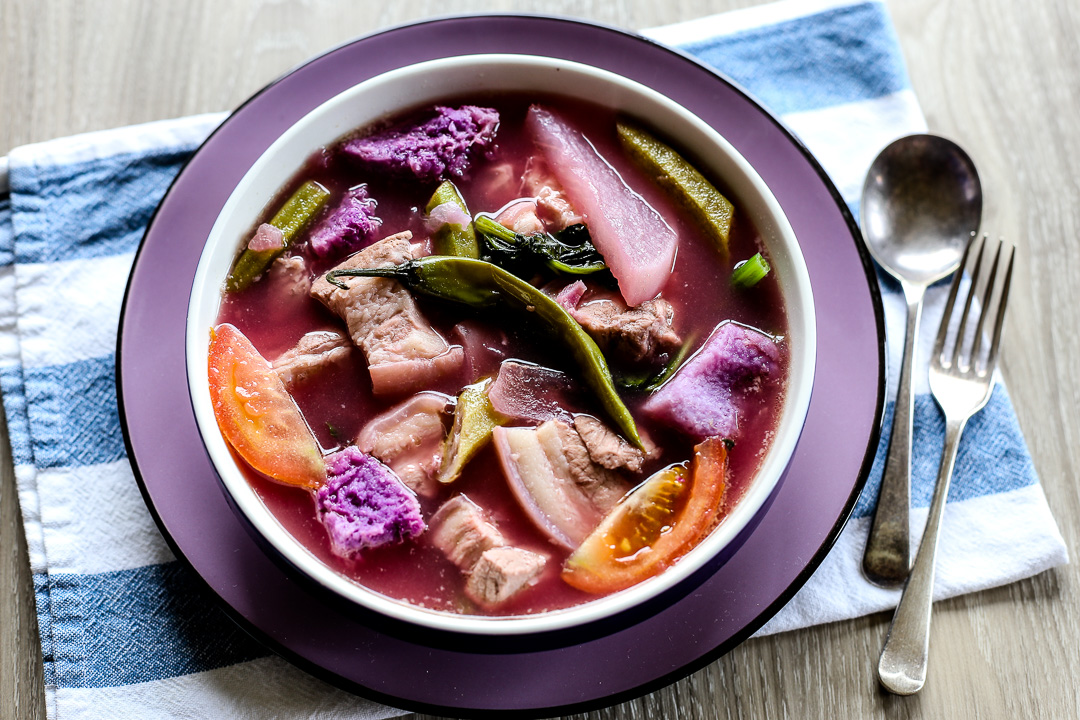
Sinigang sa Ube – This sinigang uses purple yam instead of taro
Kurobuta Pork Sinigang – Most probably the most expensive sinigang dish here where an intensely flavoured Kurobuta pork is used
Seafood Sinigang – A combination of different seafood in a sinigang broth
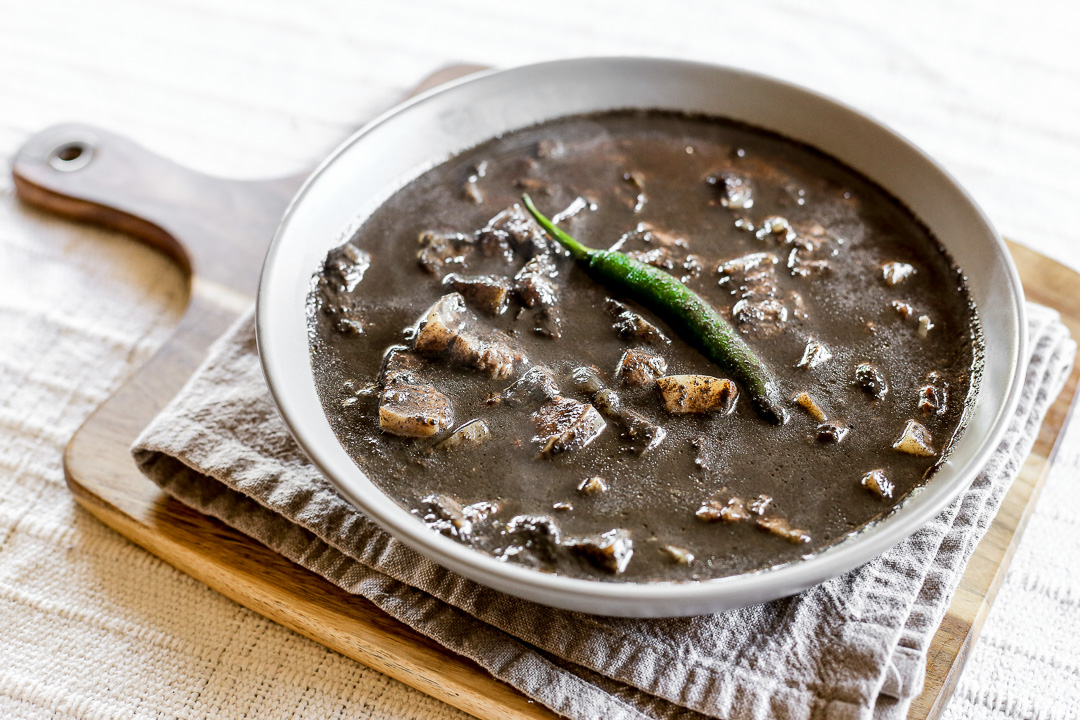
Tinumis – The only one that does not look like sinigang but tastes like it. A cross between dinuguan and sinigang.
Red Sinigang – Sinigang where Tomato Sauce is used instead of tomatoes
How about you do you have sinigang recipes that you know which we haven’t added to the list?
Some places become part of your routine without you realising it. After years away, we…
A bag of Swiss porcini turned into one of the most comforting bowls I've made…
Some recipes feel like they belong to a different era, and that's exactly what makes…
After a beach walk with Coco, we stumbled across a Japanese restaurant that pushed us…
Macanese chicken curry with coconut milk, chorizo, potatoes, olives and spices, served with rice for…




View Comments
Thanks for the excellent post! The versatility of sinigang is the reason why in a recent NY Times article on Filipino food, food historian Doreen Fernandez insists that sinigang is the national dish, not adobo.
Wow very thorough post,a great ultimate guide to sinigang. I am ashamed to say I never had one but I have to try some soon from your list.
Hello there, thank you for including our Sinigang sa Kamias Recipe. More power.
You did great for including that brief background of sinigang. Now I'll have to try all these ways for myself.
This is very very helpful, Thank you.