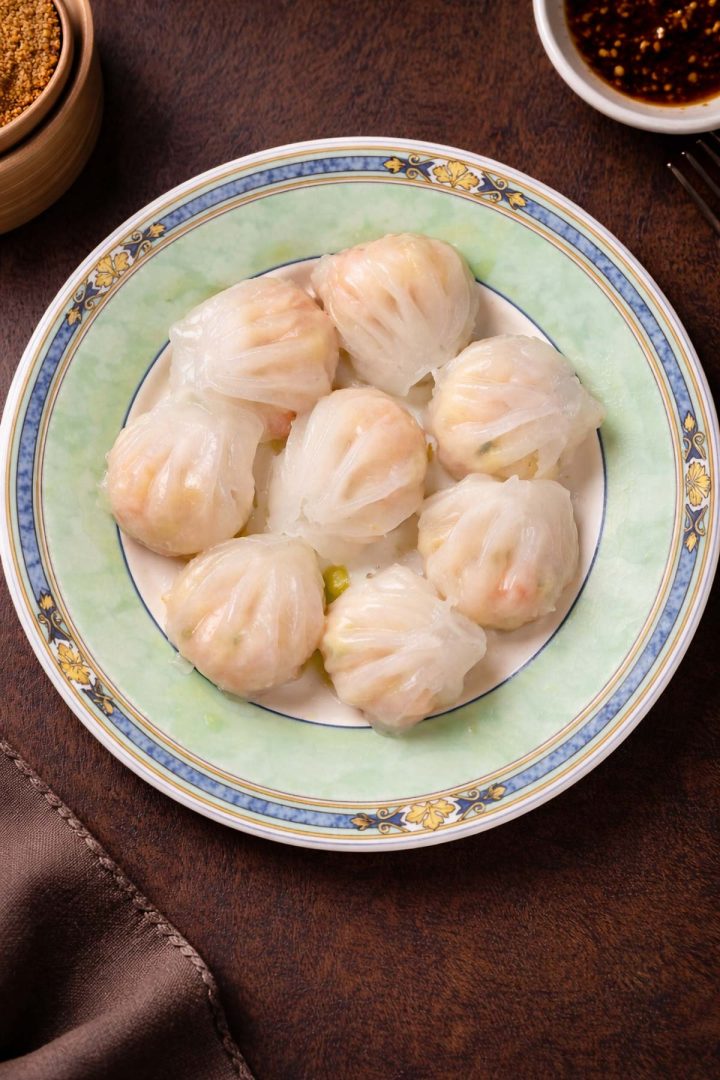
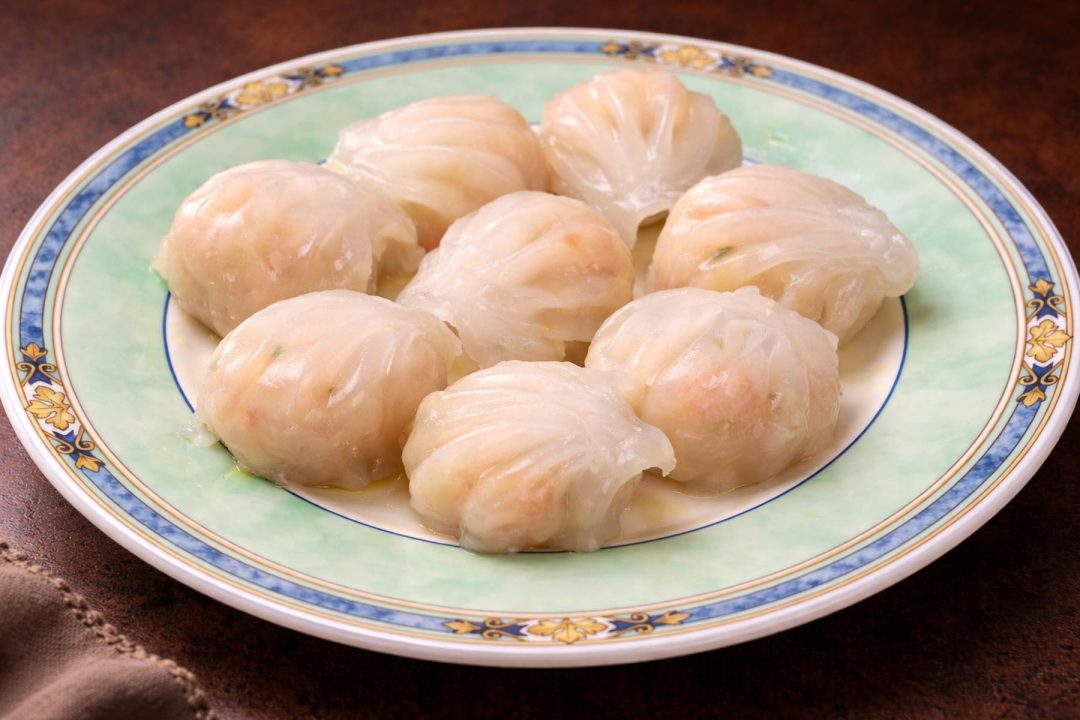
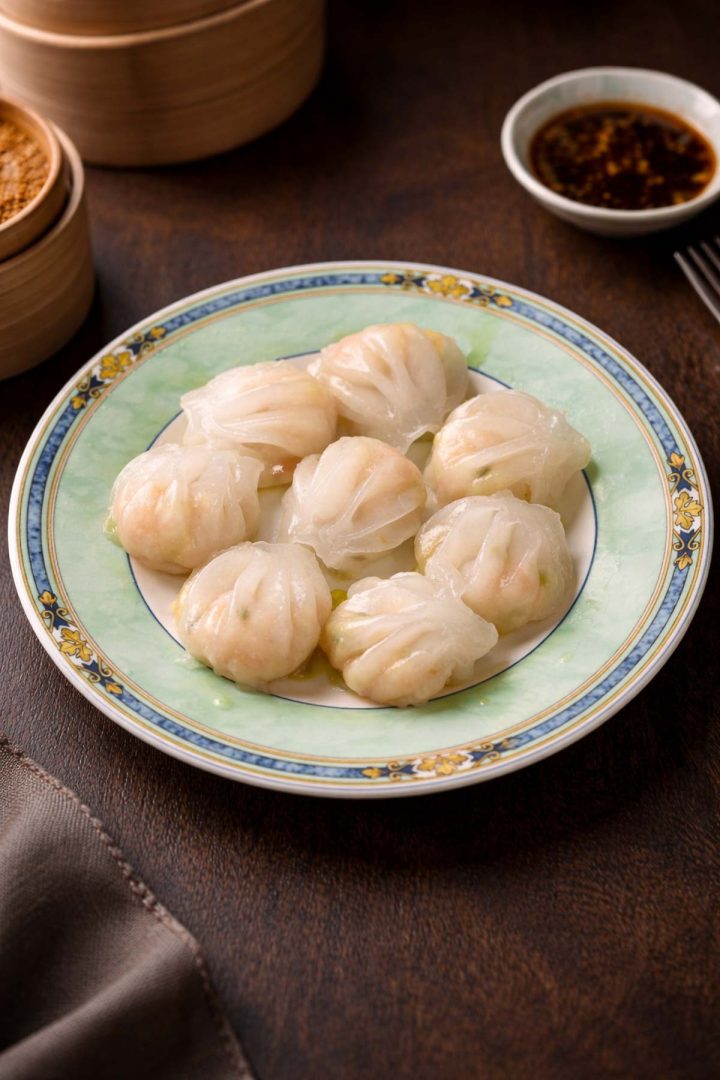
Classic Cantonese shrimp dumplings with translucent wrappers, fresh prawns, sesame oil, and a light steamed finish. Steamed, gentle, and made with care. Sometimes the simplest food is the one that says the most. #hargow
This post brings me back to our Switzerland cooking series, something I never planned to write but somehow feels necessary now. As I mentioned earlier this week, I am here to be with my mum during one of the most challenging moments of our lives. Cancer is brutal, there is no other word for it. The only small comfort we hold on to is that she lives in a country known for excellent cancer care and management.
Still, no system or statistic makes it easier. All I want to do is spend time with her, make her comfortable, and share moments that still feel normal. Food has quietly become part of that routine.
Why I Chose to Make Har Gow
Prawns have always been one of my mum’s favourite things to eat. I remember clearly that whenever she visited the Philippines or New Zealand, prawns were always on her request list. Here in Switzerland, they are expensive and not something you buy casually. This country is landlocked, after all, and seafood comes at a premium.
That made this meal feel even more intentional. I wanted to cook something she genuinely loves, but also something gentle and healthy. At this stage, I do not always know what she can or cannot eat, so steaming felt like the safest approach. No heavy sauces, no frying, no unnecessary richness. Just clean flavours and good ingredients.
Har gow felt like the right choice.
What Makes Har Gow Special
Har gow, or 蝦餃, is one of the most recognisable dim sum dishes in Cantonese cuisine. It is delicate but precise, simple in flavour yet technically demanding. The dumpling is known for its translucent wrapper, slightly chewy texture, and juicy shrimp filling.
In Cantonese dim sum tradition, har gow is considered one of the “Four Heavenly Kings,” alongside siu mai, char siu bao, and egg tarts. It is also one of the strongest markers of a good dim sum kitchen. A well-made har gow should have a thin but sturdy wrapper, visible shrimp inside, and pleats that show skill and care.
A Brief History of Har Gow
Har gow originated in Guangzhou, the heart of Cantonese cuisine. It emerged in the early 20th century, during the rise of teahouse culture known as yum cha. One of the earliest records places its creation at Yi Zhen Teahouse in Wufeng Village, where a chef wanted to highlight the abundance of fresh shrimp from the Pearl River Delta.
The dumpling quickly became popular, not just for its taste, but for the craftsmanship it required. Chefs measured their skill by how thin the wrapper could be without tearing and how many pleats they could form, traditionally between seven and thirteen.
As Cantonese communities migrated, har gow travelled with them. Today, it is a staple in dim sum restaurants worldwide, yet it still carries the same expectations of precision and restraint.
Why This Dish Matters Right Now
Making har gow in my mum’s kitchen here in Switzerland feels very different from ordering it at a restaurant. There is no rush, no pressure to make them perfect. The goal is not presentation. The goal is comfort.
Steaming the dumplings fills the kitchen with a gentle warmth, something very welcome in the middle of a Swiss winter. The prawns stay sweet and tender, the wrapper remains soft, and the flavours are clean and familiar.
This is not just about dim sum. It is about cooking something that respects the moment we are in. Something light enough to eat, familiar enough to bring comfort, and made with care rather than urgency.
Sometimes food is not about indulgence. Sometimes it is about presence.
Finely chop half the shrimp, and roughly chop the other half into big chunks. Set it aside.
Combine the shrimp, cornstarch, sesame oil, light soy sauce, salt, white pepper, sugar if using, and bamboo shoots. Mix gently and chill while preparing the dough.
In a bowl, mix the wheat starch and tapioca starch. Pour in the boiling water and stir quickly until the mixture comes together.
Add the oil and knead while warm until the dough is smooth and slightly elastic. Cover with a towel to prevent drying.
Roll the dough into a log and cut into about 20 pieces. Flatten and roll each piece into a thin circle around 7 to 8 cm wide.
Place a teaspoon of filling in the centre of each wrapper. Fold into a half-moon and pleat the edge to seal.
Line a steamer with parchment paper or cabbage leaves. Arrange dumplings with space between them.
Steam over high heat for 6 to 7 minutes, until the wrappers turn translucent and the shrimp is cooked.
Serve immediately with light soy sauce, chilli oil, or black vinegar.
One of my very favourites also, forever and ever . . . glad your Mother enjoyed and you could share together and that you managed to get the prawns mid-winter . . . actually you + har gow was the best anti-Ca med she received today :)
Raymund, this was a beautiful essay about your mom and how you are feeding her as she heals. I can feel the gentleness as you wrote. I am sedning good thoughts her way, and to you, too.
Har Gow are a favorite of mine, and I remember the first time having them in New York City at a wonder dim sum parlor. Thank you for sharing your recipe, eswpcially for the wrappers, and I look forward to trying these soon.




One of my very favourites also, forever and ever . . . glad your Mother enjoyed and you could share together and that you managed to get the prawns mid-winter . . . actually you + har gow was the best anti-Ca med she received today :)
My very favorite dim sum dish! I’m impressed that you made them yourself. They look spectacular.
Its a labour of love
Raymund, this was a beautiful essay about your mom and how you are feeding her as she heals. I can feel the gentleness as you wrote. I am sedning good thoughts her way, and to you, too.
Har Gow are a favorite of mine, and I remember the first time having them in New York City at a wonder dim sum parlor. Thank you for sharing your recipe, eswpcially for the wrappers, and I look forward to trying these soon.
New dish to me, Raymund – it looks so delicate and delicious, and now I’m definitely curious to try making it myself!