
Must Try Food Vietnam
Explore Vietnam’s must-try dishes, from pho and banh mi to bun bo Hue and chè, in this essential guide to the country’s best food. Vietnam’s kitchens, street corners, and market stalls offer some of the most unforgettable dishes in Southeast Asia. Here’s my roundup of what you need to eat across the country.

Vietnam is one of those places that stays with you long after you leave. It’s not just the landscapes or the culture but the food, vibrant, soulful, and beautifully layered with history. After our recent trip, I realised that Vietnam’s cuisine tells the story of its people through bowls of noodles, fragrant broths, crusty breads, and colourful sweets. Each region has its own flavours, each city its own culinary personality. And as we travelled, it became clear that the best way to understand the country is to eat your way through it.
Vietnamese food has always been shaped by geography and history. The north leans towards simpler flavours; the central coast adds spice and intensity; the south brings sweetness and abundance. Chinese, French, and Southeast Asian influences merge seamlessly with ancient Vietnamese cooking traditions. What you get is a cuisine that is fresh, balanced, and endlessly satisfying. If you’re planning a trip, this list sums up the essential dishes you cannot miss, Vietnam’s greatest hits, from north to south.
Soups and Noodles
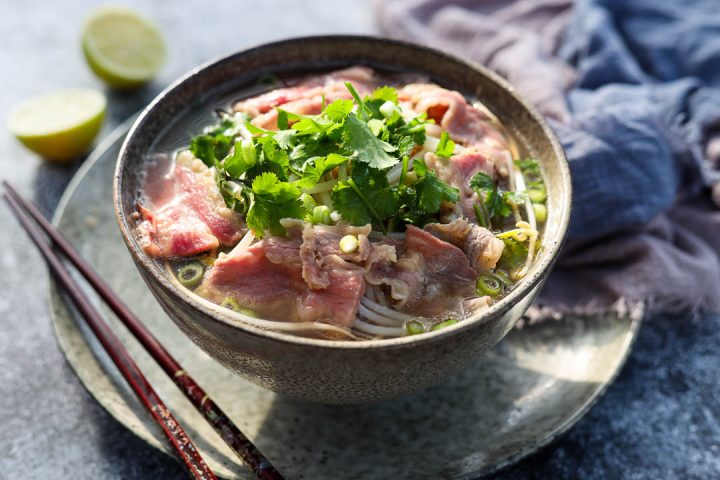
Phở
Let’s start with the dish that needs no introduction: phở. It’s not just Vietnam’s most famous export, it’s a daily ritual for locals. What makes phở so special is its broth, patiently simmered with star anise, clove, cinnamon, and charred onions. In the north, Phở Hà Nội is straightforward and elegant: clear broth, minimal herbs, and delicate slices of beef or chicken. As you head south, you’ll find Phở Nam, richer and more fragrant, often served with heaps of fresh herbs, bean sprouts, and lime. Every region swears theirs is the best, and honestly, every bowl has its own charm.
Cao Lầu
Hoi An has many treasures, but its most famous dish is Cao Lầu. The noodles are what set it apart, thick, chewy, and unlike anything else in Vietnam. Traditionally, the dough is soaked in water taken from ancient Cham wells, which supposedly gives the noodles their distinctive texture. The bowl is layered with pork slices, fresh herbs, and crispy rice crackers. It captures the essence of Hoi An: rustic, historic, and full of character.
Mì Quảng
Central Vietnam gives us Mì Quảng, a vibrant dish with turmeric-tinted noodles, shrimp, pork, roasted peanuts, and fresh greens. It’s only lightly sauced, almost like a noodle salad, and carries the sunny warmth of Quảng Nam Province. It’s bold, colourful, and far lighter than many noodle soups, making it perfect for hot days in the central region.
Street Food Classics

Bánh Mì
Bánh mì is a product of Vietnam’s French colonial past, but it has evolved into something unmistakably Vietnamese. Crispy baguette on the outside, soft on the inside, packed with pâté, pickled vegetables, herbs, sliced pork belly, cucumber, and sometimes pork floss. Each region puts its own twist on it, Hoi An’s version tends to be richer, while Saigon’s is packed and hearty. No matter where you try it, it’s the perfect grab-and-go street food.
Gỏi Cuốn (Fresh Spring Rolls)
Light, fresh, and full of texture, gỏi cuốn are a must. They’re made with rice paper rolled around shrimp, pork, vermicelli noodles, and herbs, then dipped in peanut or hoisin sauce. Unlike fried rolls, these are meant to be refreshing, a contrast to the tropical heat.
Nem Rán / Chả Giò (Fried Spring Rolls)
These golden rolls are crunchy on the outside and savoury inside, filled with minced pork, mushrooms, and glass noodles. They’re a street food favourite, appearing everywhere from roadside vendors to family restaurants. With a splash of nước chấm, they become irresistible.
Rice Dishes

Cơm Gà (Chicken Rice)
Hoi An’s chicken rice is simple but unbelievably satisfying. The rice is cooked in chicken stock, giving it a fragrant, yellow tint. Shredded chicken, herbs, and chilli jam complete the dish. It’s humble, comforting, and full of flavour, one of those meals you return to again and again.
Cơm Tấm (Broken Rice)
Saigon’s most iconic rice plate is Cơm Tấm. Traditionally made from broken grains that were once considered low-grade, it evolved into a beloved dish served with grilled pork chops, fried egg, pickled vegetables, and a generous spoon of fish sauce dressing. It’s hearty and energising, as street food should be.
Xôi (Sticky Rice)
Sticky rice in Vietnam is surprisingly versatile. It can be savoury, topped with shredded chicken or Chinese sausage, or sweet, paired with mung beans or coconut. It’s commonly enjoyed for breakfast, a quick snack that keeps you going until lunch.
Desserts and Sweets

Chè
Vietnamese desserts are often cooling and refreshing, and chè is the perfect example. It’s a broad category that includes everything from sweet soups to layered puddings, made with beans, jellies, fruits, and coconut milk. Whether it’s black bean chè, fragrant corn chè, or delicate lotus seed chè, it offers comfort in every spoonful.
Bánh Flan
This silky caramel custard is a gentle nod to France, though the Vietnamese twist often includes coffee syrup. It’s soft, smooth, and usually served chilled, ideal after a hot day exploring the city.
Mứt (Candied Fruits and Seeds)
Mostly enjoyed during Lunar New Year, mứt comes in many forms: ginger, coconut, lotus seeds, and tropical fruits. While simple, these treats often carry nostalgic value for families celebrating Tết.
Regional Specialities

Bún Chả (Hanoi)
If phở is the soul of northern Vietnam, then bún chả is its spirit. Grilled pork patties and slices are served with vermicelli noodles, herbs, and a dipping broth that’s savoury, tangy, and slightly sweet. It’s a dish you eat slowly, assembling each bite as you go.
Bún Bò Huế (Hue)
This spicy, aromatic noodle soup is a signature of the former imperial city. Lemongrass, shrimp paste, and chilli oil give the broth a bold depth. The noodles are thicker than phở, and the toppings often include beef shank and pork. It’s intense, warming, and unforgettable.
Hủ Tiếu
Southern Vietnam offers Hủ Tiếu, a lighter noodle soup served with pork or seafood. It’s less herbal than phở, but its simplicity makes it comforting. You’ll often find it served either as soup or dry with broth on the side.
Vietnam has so many dishes worth travelling for, and these are just the essentials. Each bowl, roll, or plate tells a story, reflecting the culture and history of the region it comes from. Whether you’re slurping phở at sunrise or discovering new flavours in a bustling market, Vietnam offers unforgettable food moments at every turn.


We’ll be in Vietnam next October and I’m so excited. Especially for the food!
Yeah, food is great and cheap
I love — LOVE — Phở and that is great, as it is one of the few Vietnamese dishes without garlic. (Unless I make them at home, which I do.) I plan to look up quite a few of these dishes to try at home.