
13 Must-Try Traditional Dishes and Delicacies of Bulacan
Discover 13 traditional Bulacan foods, from heritage pork dishes and seafood specialities to famous milk sweets and pastries. Generations of family cooking, regional traditions and remarkable local specialities make Bulacan one of the Philippines’ great food provinces. Here are 13 worth discovering. #BulacanFood #BulakenyoCuisine #FilipinoFood

When talking about Philippine provinces with a serious culinary heritage, 13 Must-Try Traditional Dishes and Delicacies of Bulacan only begins to show what this part of Central Luzon has to offer. Bulacan has long been associated with good food, from carefully prepared sweets and pastries to elaborate dishes traditionally served during fiestas and important family celebrations. What makes the province particularly interesting is how many of its specialities remain connected to specific towns and communities.
Bulakenyo cooking draws heavily from the landscape around it. Fertile agricultural land provides rice, vegetables and livestock, while rivers, wetlands and coastal areas supply freshwater fish, prawns and other seafood. Add centuries of Spanish influence to indigenous Tagalog cooking traditions and you get a cuisine that can move effortlessly from fermented fish and frog dishes to intricate pastries, cured meats and celebratory rice dishes.
What I find most interesting about Bulacan cuisine is the craftsmanship behind many of these foods. Some require fermentation or careful preservation, others involve painstaking pastry work, while several depend on techniques passed down through families for generations. They are not simply recipes. They tell us something about how Bulakenyos lived, what ingredients surrounded them and how celebrations, agriculture and history shaped what eventually appeared on their tables.
Bulacan’s Famous Sweets and Pastries

Perhaps no delicacy represents Bulacan better than Pastillas de Leche. Closely associated with San Miguel and its dairy heritage, these little milk candies traditionally combine fresh milk and sugar, slowly cooked until the mixture becomes thick, creamy and concentrated.
The simplicity of the ingredients can be misleading because good pastillas is all about technique. The milk flavour should remain at the centre rather than being overwhelmed by sweetness, resulting in something soft, rich and almost melt-in-your-mouth.
There is also another beautiful tradition associated with Bulacan’s pastillas. The sweets can be wrapped in intricately cut paper called pabalat. These decorative wrappers transform a humble milk confection into something that represents both culinary and folk artistry.

From Baliwag comes another famous Bulakenyo favourite, Inipit. Its name essentially describes something pressed or sandwiched between two layers, which makes perfect sense once you see the pastry.
Soft layers of cake surround a rich custard-like filling, creating a combination that is light yet indulgent. The filling provides buttery richness while the cake keeps everything from becoming excessively heavy.
It is easy to understand why inipit became such a popular pasalubong. It travels reasonably well, pairs beautifully with coffee and offers the sort of gentle sweetness that makes it very easy to eat another piece.

One of Bulacan’s most beloved kakanin, Sapin-Sapin is a colourful layered rice cake whose name literally means “layers.” Made from glutinous rice flour, coconut milk and sugar, each layer is often flavoured differently, commonly with ube, jackfruit or coconut, giving the delicacy both its festive appearance and distinctive taste.
Despite its vibrant colours, Sapin-Sapin is prized more for its texture than its appearance. The rice cake is soft, chewy and pleasantly sticky, while the coconut milk provides a richness that balances its gentle sweetness. Each layer contributes a slightly different flavour, making every bite more interesting than the last.
A generous topping of toasted latik completes the dessert, adding nutty aroma and a subtle caramelized flavour. Frequently served during fiestas, celebrations and family gatherings, Sapin-Sapin remains a wonderful example of Bulacan’s rich kakanin tradition and the province’s enduring love for coconut-based sweets.

Malolos gives us one of the most visually distinctive foods on this list, Empanada de Kaliskis.
The word kaliskis means scales, and one look at its beautifully layered pastry explains the name. Instead of the relatively smooth crust found on many empanadas, this Bulakenyo version has flaky layers that resemble overlapping fish scales.
Inside that elaborate shell sits a savoury meat filling. The contrast between the crisp, delicate pastry and the seasoned centre makes it something quite special.
It also demonstrates the Spanish influence woven into Bulakenyo cuisine. The basic concept of an empanada arrived from abroad, but local cooks developed it into something with its own distinctive identity.
Heritage Dishes from Malolos

Celebration food can tell us a great deal about a place, and Hamon Bulakenya reflects the importance of carefully prepared meats on the traditional Bulakenyo festive table.
Associated particularly with Malolos, this cured ham balances sweetness with savoury flavours and is strongly connected with Christmas and other important celebrations.
Today it is easy to buy commercially prepared ham, but traditionally, making something like Hamon Bulakenya involved far more time and effort. The curing and cooking process became part of a family’s culinary knowledge, with recipes and techniques handed from one generation to another.
It is exactly this connection with celebrations and family tradition that makes dishes such as Hamon Bulakenya worth preserving.
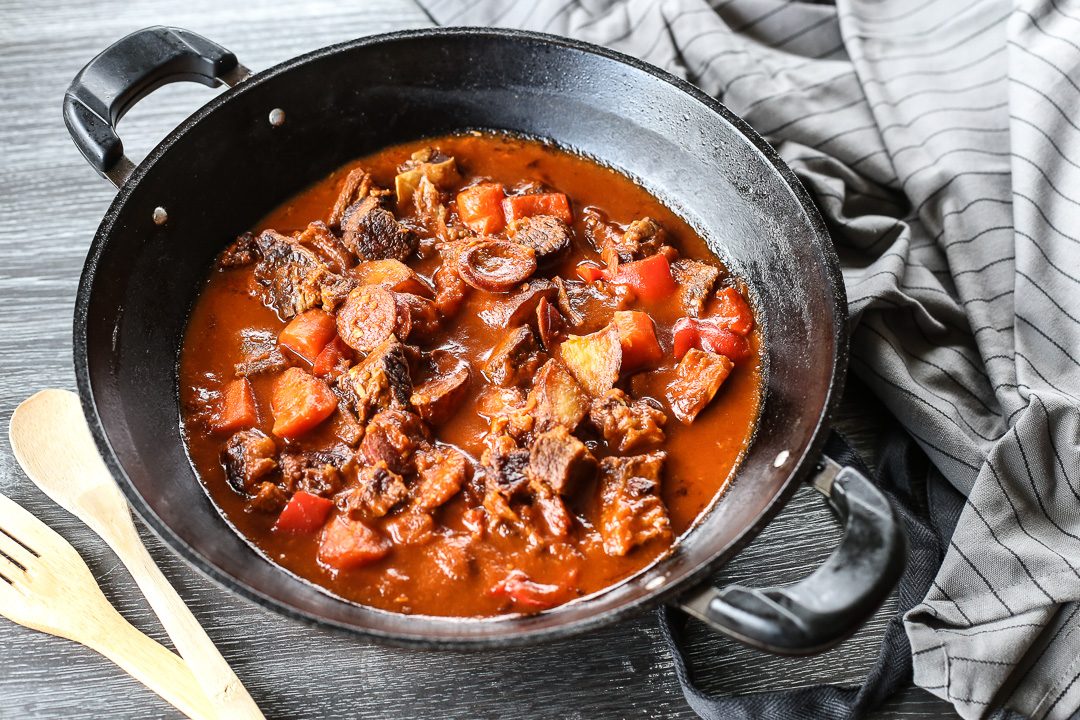
Another Malolos heritage dish, Asado de Carajay, showcases the slow-cooked side of Bulakenyo cuisine.
Pork cooks gently in a deeply flavoured sauce until it becomes exceptionally tender. Rather than simply coating the meat with sauce at the end, the long cooking allows those flavours to work their way into the pork.
The result is rich, savoury and comforting. It is exactly the sort of dish that demands plenty of steaming white rice beside it.
Asado de Carajay also reminds us that many of Bulacan’s most interesting recipes survive because families continue cooking them. Without that transfer of knowledge between generations, dishes like this could easily disappear as modern convenience foods become more common.
The Famous Crunch of Bulacan

Mention Bulacan to someone who loves crispy pork and Chicharon Bulacan will probably enter the conversation fairly quickly.
Santa Maria in particular has developed a strong reputation for producing chicharon, helping make the snack one of the province’s most recognisable food products.
Good chicharon should have a wonderful light crunch rather than feeling excessively hard or dense. There should also be enough pork flavour to remind you that this isn’t simply something crispy.
Give me a bowl of this with some spiced vinegar and I can easily understand why it works so well as both pasalubong and pulutan. Sometimes the simplest combinations are the hardest to stop eating.
Preserving Food the Traditional Way

Burong Isda
Before refrigerators became part of everyday life, fermentation gave communities an effective way of preserving seasonal abundance. Burong Isda is a perfect example of how necessity eventually created something people came to appreciate for its flavour as much as its practicality.
Freshwater fish is combined with cooked rice and allowed to ferment. During that process, the mixture develops its characteristic sourness, savouriness and strong aroma.
Buro can certainly be challenging for anyone encountering it for the first time. It doesn’t hide the fact that it is fermented. But for people who grew up eating it, that funky, tangy character is exactly what makes it so appealing.
More importantly, burong isda gives us a glimpse into the ingenuity of traditional rice-growing communities. They found ways to preserve food without modern refrigeration and, in doing so, created flavours that remain part of regional cuisine today.
A Dish Made for Celebrations

Bringhe ng Tagumpay
Bringhe ng Tagumpay, associated with Paombong, represents the celebratory side of Bulacan cuisine.
Bringhe often gets described as a Filipino relative of Spanish paella, although that comparison only tells part of its story. Filipino cooks took the general idea and adapted it to local ingredients and tastes.
Coconut milk gives bringhe a distinctly rich character, while cooking or presenting it with banana leaves adds another layer of aroma. It is colourful, filling and made for sharing, which explains why dishes like this naturally found their place at fiestas and important community gatherings.
Bringhe is also a good example of how foreign influences became something distinctly Filipino rather than simply being copied.
From Bulacan’s Rice Fields

Batute
Perhaps one of the most intriguing foods on this list is Batute, a speciality associated with San Ildefonso.
Frogs have long been available around Philippine rice-growing areas, and rural cooks transformed this readily available ingredient into something surprisingly elaborate. Batute uses dressed frogs stuffed with seasoned ground meat before they are fried until golden and crisp.
For someone unfamiliar with eating frog, the idea might initially sound adventurous. But frog meat itself has a relatively mild flavour, allowing the seasoned filling and crispy exterior to contribute much of the dish’s character.
Rather than looking at Batute simply as an unusual food, I think it is more interesting to see it as an example of rural ingenuity. Farming communities used what was abundant around them and transformed it into something that eventually became part of Bulacan’s culinary identity.

Adobong Palaka
Frog also appears in the more straightforward Adobong Palaka, another dish closely connected with Bulacan’s rural farming communities.
Here the familiar Filipino combination of vinegar, garlic and seasonings provides the foundation for cooking the frog. The result is savoury, slightly tangy and perfect with rice.
This preparation demonstrates one of adobo’s greatest strengths. Adobo isn’t limited to one particular meat or even one exact recipe. It is a cooking approach that Filipino communities have adapted according to whatever ingredients were readily available.
In Bulacan’s rice-growing areas, palaka naturally became one of those ingredients. What might seem exotic elsewhere was simply part of the surrounding environment.
Seafood from Coastal Bulacan

Alimango sa Misua
Bulacan isn’t just farmland. Its rivers, wetlands, fishponds and coastal areas contribute another important dimension to the province’s cuisine.
Alimango sa Misua combines fresh mud crab with delicate misua noodles in a comforting seafood broth. Misua noodles are incredibly fine, so they readily absorb the flavour of whatever broth they cook in.
When crab enters the equation, that broth becomes particularly good. The natural sweetness of the crab enriches the soup while the noodles soak up all that seafood flavour.
It is much gentler than some of the richer dishes on this list, but that simplicity is exactly what makes it appealing. When the crab is fresh, there is little reason to complicate things unnecessarily.

Another dish highlighting Bulacan’s access to seafood is Nilasing na Hipon, literally translated as “drunken prawns”.
Fresh prawns form the heart of the dish, producing something savoury and particularly well suited to gatherings. Depending on the preparation, the prawns can develop a wonderfully crisp exterior while retaining their juicy sweetness inside.
This is the kind of food that comfortably crosses the line between ulam and pulutan. Put it beside rice and you have a satisfying meal. Serve it during an afternoon or evening drinking session and it feels equally at home.
The best versions still allow the natural flavour of the prawns to shine. After all, when seafood is fresh, you don’t want to bury it beneath unnecessary ingredients.
Why Bulacan Deserves Its Culinary Reputation
One thing that becomes obvious when looking through these dishes is just how varied Bulacan cuisine really is. Pastillas de Leche and Inipit show its skill with sweets, while Empanada de Kaliskis demonstrates intricate pastry craftsmanship. Hamon Bulakenya and Asado de Carajay reveal another side of its Spanish-influenced heritage cooking.
Travel towards the rice-growing communities and the food changes. Burong Isda demonstrates traditional fermentation and preservation, while Batute and Adobong Palaka show how rural cooks made excellent use of ingredients readily available around the rice fields.
Then there is Bulacan’s relationship with its waterways. Alimango sa Misua and Nilasing na Hipon remind us that seafood also plays an important role in the province’s food culture.
What I particularly enjoy about exploring regional Filipino cuisine is seeing how geography determines what people cook. It is easy to think of Filipino food as one cuisine, but travel between provinces and the differences become increasingly obvious. Sometimes those changes involve ingredients, while other times they involve techniques, preservation methods or dishes reserved for particular celebrations.
Bulacan takes that regional identity even further because many foods have become associated with individual towns. San Miguel has its dairy heritage and pastillas. Baliwag has inipit. Malolos preserves some of the province’s most fascinating heritage dishes and pastries. Santa Maria built a reputation around chicharon. Paombong has its own culinary traditions, while farming and coastal communities contribute completely different flavours.
And that is what makes 13 Must-Try Traditional Dishes and Delicacies of Bulacan much more than a checklist of things to eat. Taken together, these foods form a culinary journey through the province, from dairy farms and rice fields to heritage kitchens, fishponds and coastal communities.
Some are familiar throughout the Philippines, while others may surprise even Filipinos from outside the province. But each one contributes another piece to the story of Bulacan, a province where food, history, agriculture and family tradition remain deeply intertwined.


I am obsessed with the Pastillas de Leche and the Inipit — and, yes, all the others look good, too, but I am in a dessert mood now! I am saving several of these to make soon.
i enjoyed reading this write up. i especially like to learn how to make the empanada de kaliskis, hamon bulakenya, asado de carajay, bringhe de tagumpay, and sapin sapin. it looks easy enough but i know that everything invlove intricate works like making the empanada de kaliskis dough.
thanks for sharing & i wish i can find some time to try the different goodies out.
success!
This post is a whole education for me. I’ve never had nor heard of a single one of these dishes! I have a lot more learning, and tasting, to do.
These all look so delicious, Raymund! I find the mix of influences in Filipino food fascinating.